Founder story
How I built a revenue-ready product with Adento in one afternoon
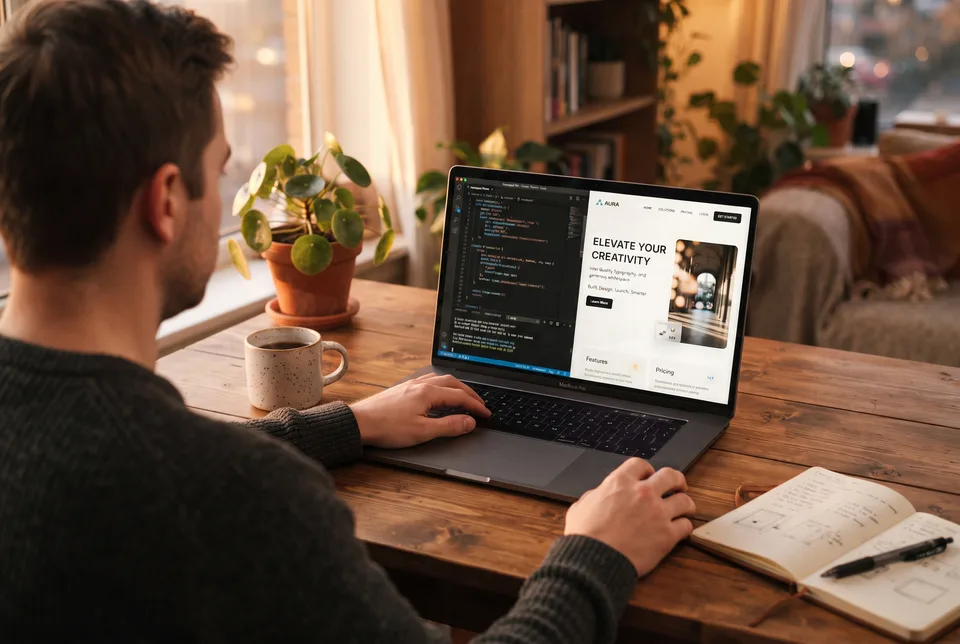
I had an idea I was sure about and no afternoon to spare: a pack of 300 animated video ads that any brand could re-skin in fifteen minutes. The kind of product where the hard part is not the code, it is everything around the code. Research, positioning, a landing page that converts, checkout, license delivery, a launch post. I had shipped products like this before. It always took two weeks of evenings.
This one took an afternoon. Here is what actually happened, gate by gate.
Gate 1: describe the idea
I opened Claude Code in an empty folder and typed one line:
/build "a one-time-purchase pack of 300 animated video ads, $97, for small brands"Max, the team lead, came back with three questions. Do buyers get source files or rendered videos? Is there a free sample? Which payment provider? I answered in one message: rendered videos plus the project files, yes to a free sample of five, Stripe. That was the last time I typed anything longer than a sentence.
Gate 2: approve the spec
Nia, the researcher, spent four minutes and came back with something I would have skipped: eleven competing packs, prices from $29 to $499, and the observation that none of them showed the ads playing on the landing page. They all showed thumbnails. That became the whole angle.
Mia turned it into a one-page spec. Five sections, one product, one price, a live preview grid, a sample download in exchange for an email. What to skip: subscriptions, tiers, a blog, a dashboard. I edited two lines and approved.
Gate 3: watch it get built
Leo picked the saas-landing template and swapped the hero for a video grid. Kai built it: five sections, the grid with autoplaying previews, a Stripe checkout button, a sample form. Zoe pulled the palette from my logo, set IBM Plex Sans, tightened the spacing until it stopped looking like a template.
Then the QA gate ran without asking me. Lighthouse 97 on performance, 100 on accessibility and SEO. Screenshots at 375, 768 and 1440. Zero broken links. Kai flagged one thing on his own: the video grid was pushing mobile load to 4.8 MB, so he lazy-loaded everything below the fold and got it under 1 MB. I only saw the report.
Gate 4: launch and grow
Sam wrote the meta tags and OG images, generated the sitemap, and left a six-article content plan in marketing/seo.md. The deploy skill pushed to Cloudflare Pages and pointed my domain at it. Ana wrote the launch post, three ad hooks and a four-email welcome sequence for the sample downloaders.
The delivery side, the part I always dread, was one more sentence: "when Stripe confirms payment, email a license key and the download link." Kai wired a small worker, tested it with a $0 coupon, and showed me the email.
What it cost
Thirty-eight minutes of agent time. Maybe an hour of mine, most of it reading and saying yes. No new subscription: the agents ran inside the Claude Code plan I already pay for. The kit itself was a single payment.
The first copies sold that week. Not because the agents are magic, but because the boring parts that usually kill a launch, the research, the checkout, the emails, the SEO, were simply done, in the right order, with a gate where my opinion mattered and silence where it did not.
If you want to try the same thing
The eight agents, the /build workflow, twenty templates and the skills I used are the Adento kit. It works in Claude Code, Codex, Cursor and Gemini CLI. One payment, the code stays in your repo.